

Biomedical calibration for healthcare institutions
NABL-accredited medical equipment calibration services
Accurate measurements, traceable results and cleaner documentation for hospitals, medical colleges, diagnostic centres and healthcare engineering teams.
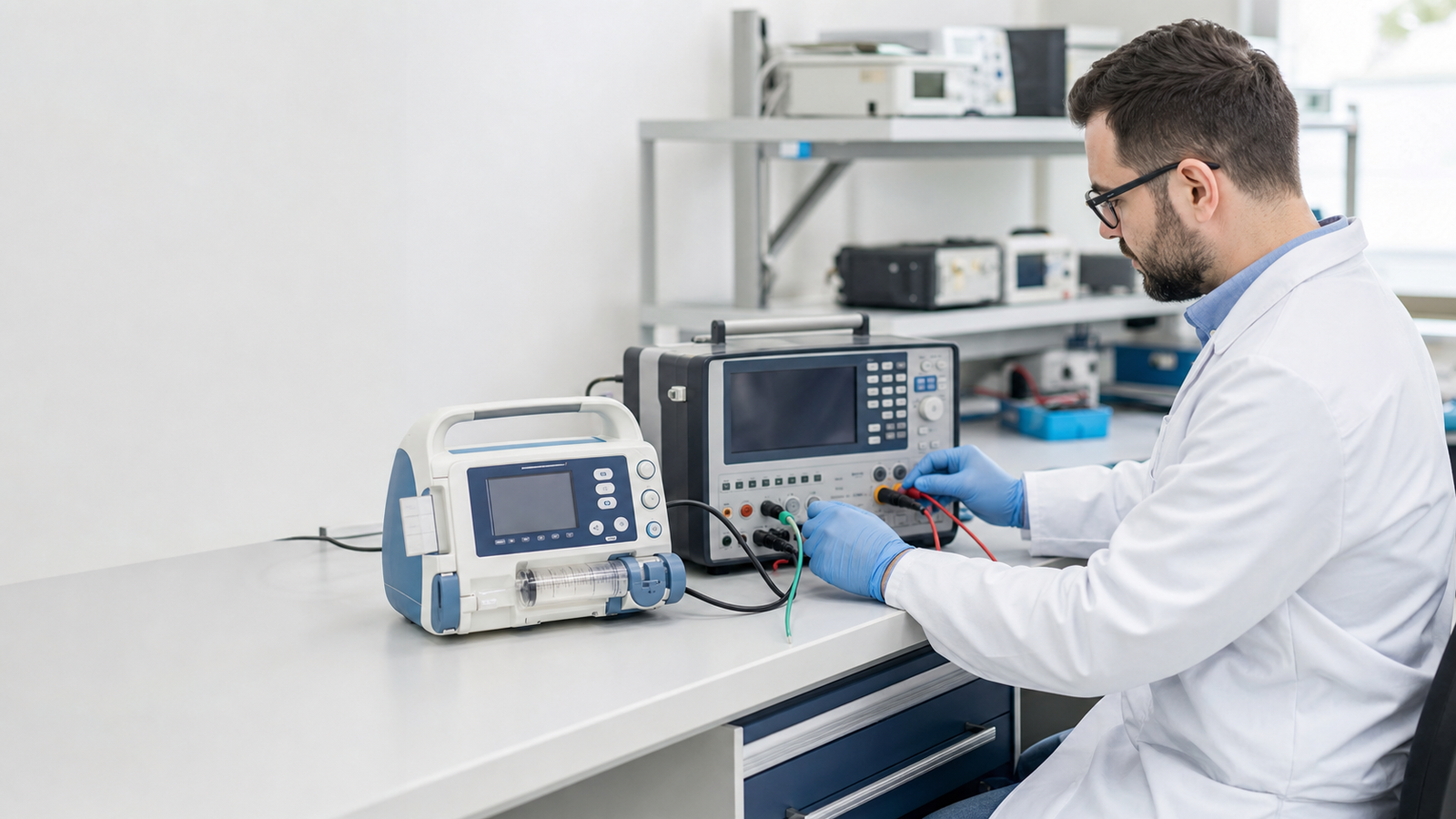
Our laboratory provides NABL-accredited calibration services within our approved scope in accordance with ISO/IEC 17025 requirements. We help teams plan, execute and document calibration without losing sight of hospital operations.
15+ years
Healthcare engineering experience since 2009
NABL scope based
Accreditation applied only to approved parameters and ranges
On-site support
Planned at your facility where technically feasible
Audit-ready records
Certificates, labels and organised equipment documentation
Why calibration matters
Biomedical equipment calibration that supports accuracy and patient safety
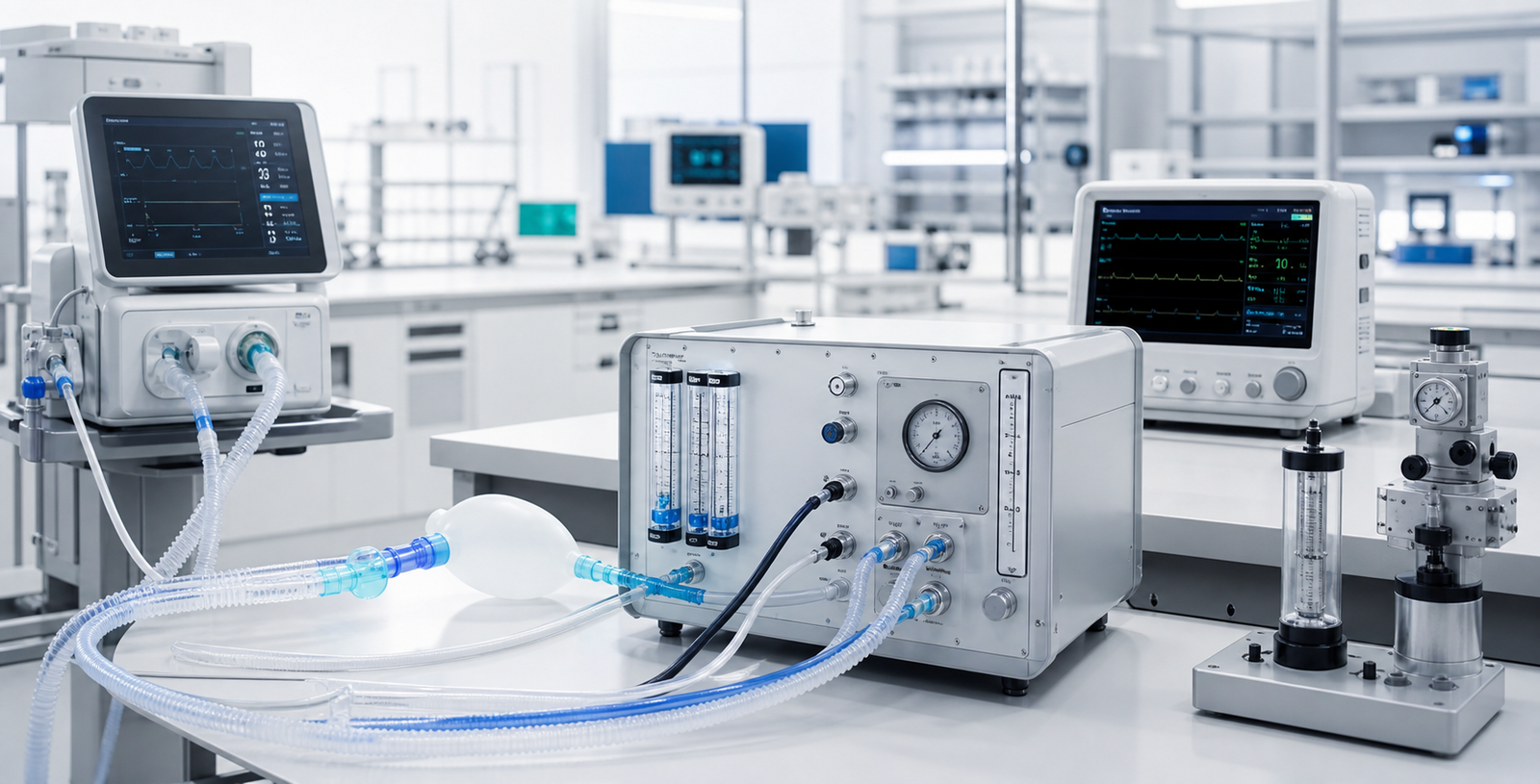
Medical equipment may continue to power on while a measured or delivered parameter has drifted outside the expected tolerance. Calibration compares the indication or output of equipment against a suitable reference standard under defined conditions.
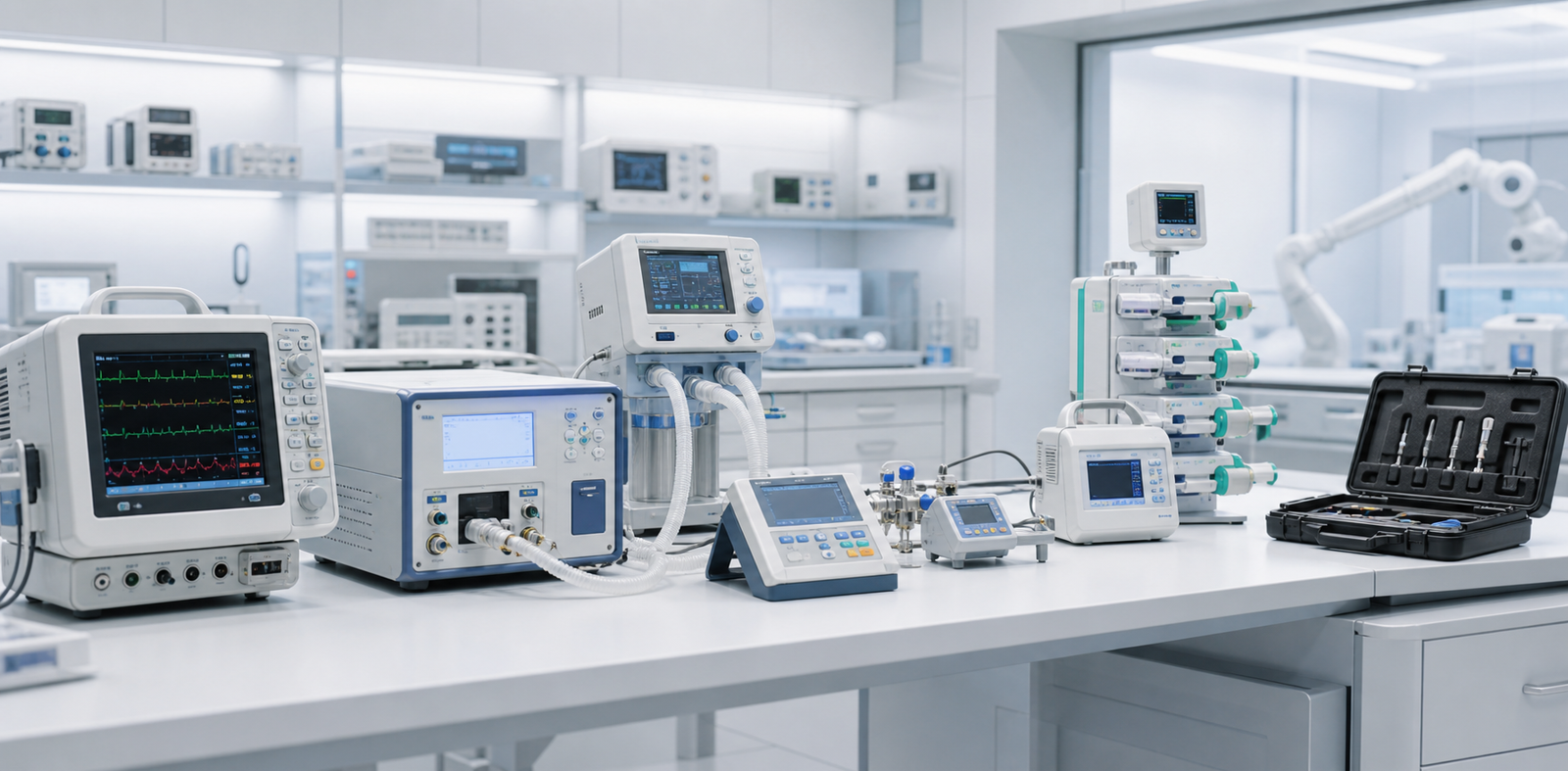
Aussin supports a dependable calibration programme across ICU, OT, emergency, NICU, PICU, dialysis, wards, laboratory, radiology, CSSD, dental, physiotherapy, ambulance services and medical gas systems.
Our focus is not limited to issuing certificates. We help customers identify equipment, plan due dates, reduce disruption and maintain usable records for internal review and audit preparation.

About Aussin
People, instruments and records working together.
Aussin Intensive Care Pvt. Ltd. supports healthcare institutions with biomedical engineering, medical equipment calibration, equipment maintenance and hospital technical support services.
Our team combines practical clinical-environment knowledge with disciplined measurement and documentation, helping hospitals keep equipment histories usable long after a service visit.
Biomedical engineering experience
Hospital workflow awareness
Traceable documentation
Calibration services
Medical and biomedical equipment calibration services
The exact parameter, range, method, location and accreditation status should always be confirmed against the current approved NABL scope.
01
Patient monitoring equipment
Multiparameter monitors, ECG, SpO2, NIBP, IBP, respiration, temperature, heart rate and EtCO2 where applicable.
02
Ventilators and anaesthesia
Tidal volume, pressure, flow, respiratory rate, oxygen concentration, PEEP and leak-related checks based on configuration.
03
Infusion and syringe pumps
Flow rate, delivered volume, occlusion pressure, bolus delivery and time-based delivery performance at selected test points.
 04
04
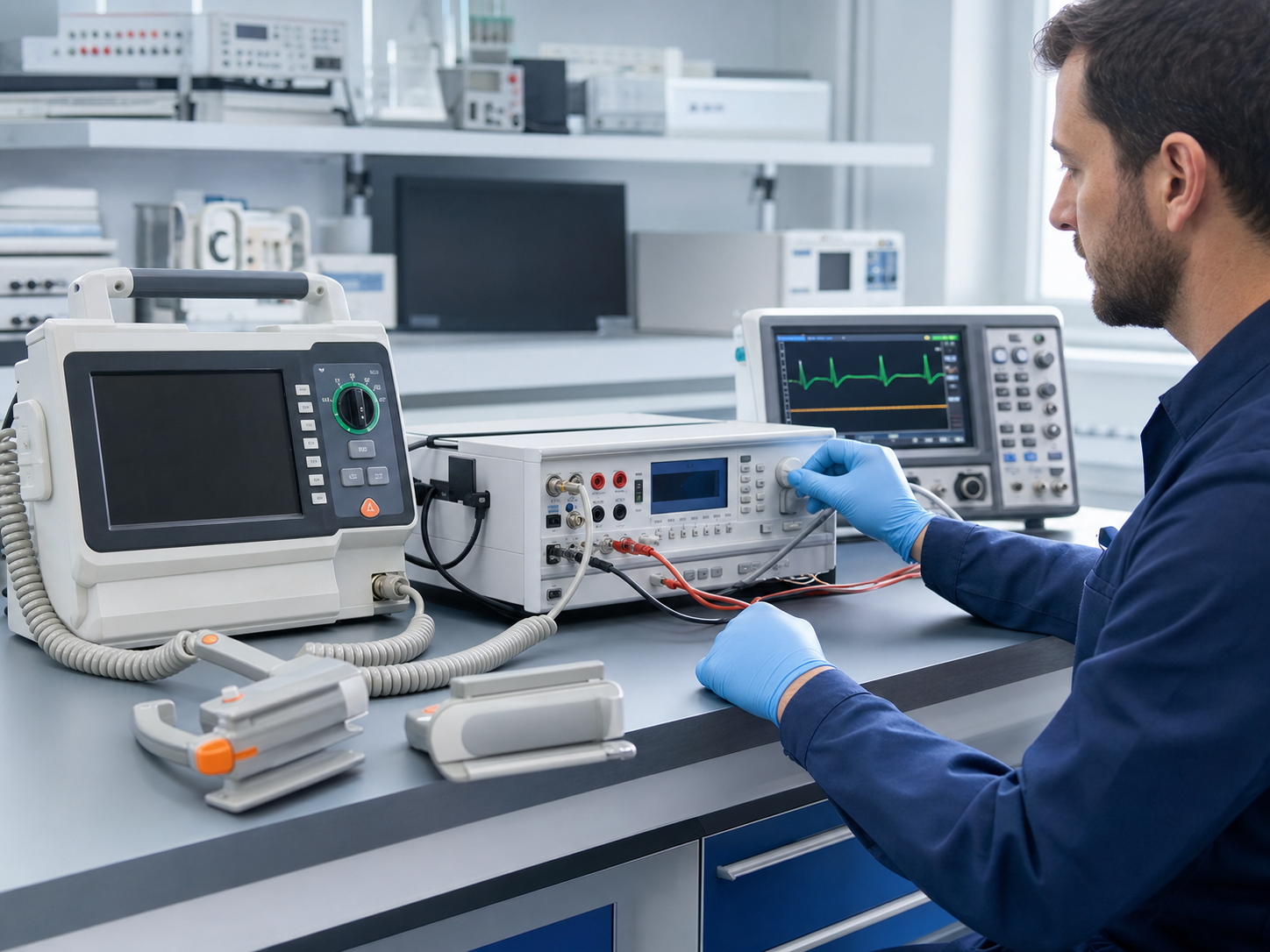
Defibrillators and ECG machines
Delivered energy, charge time, synchronisation delay, pacer parameters, ECG amplitude, heart rate and time base.
 05
05
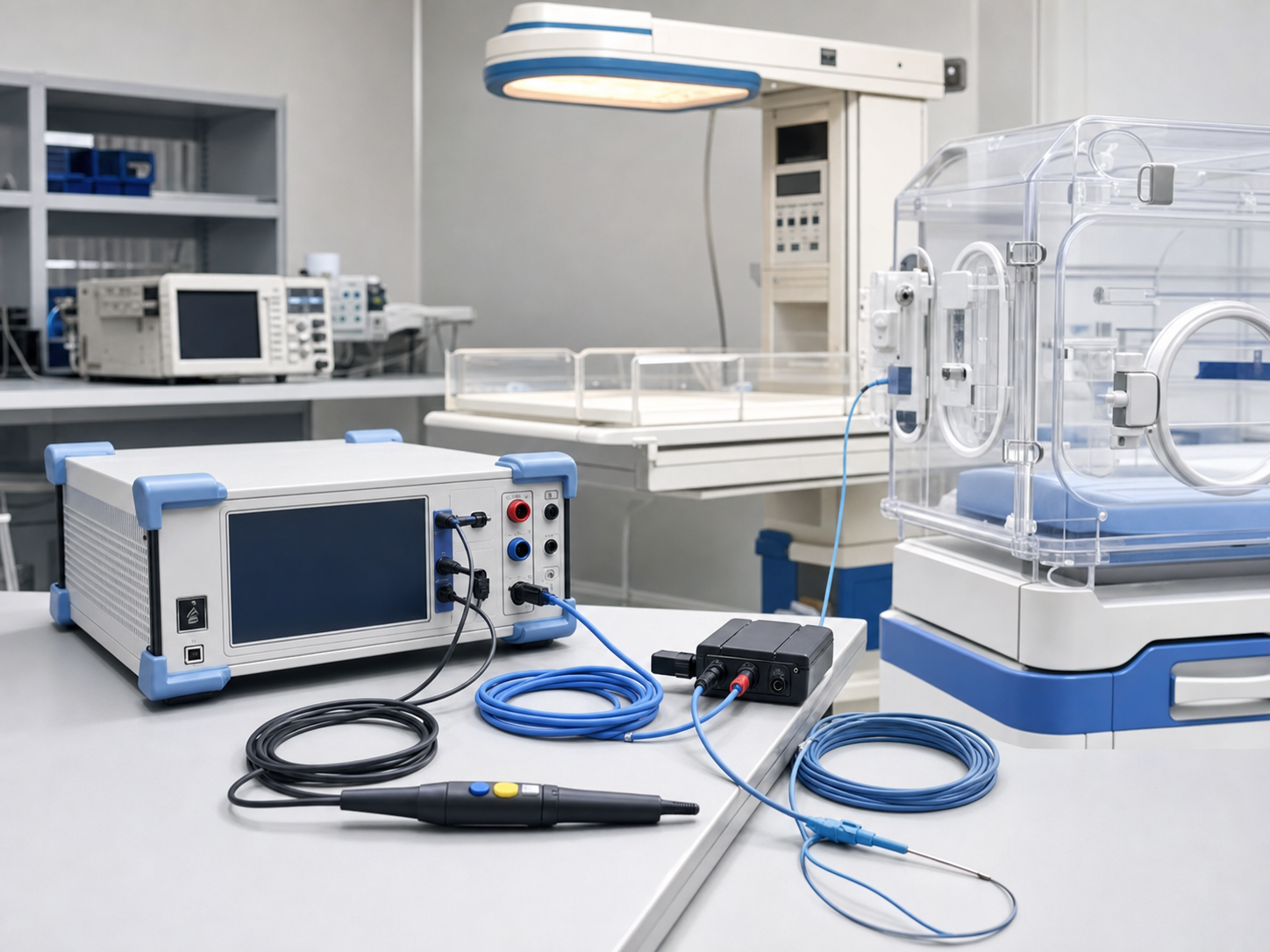
ESU and neonatal equipment
Electrosurgical output, high-frequency leakage, incubator temperature, warmer response, humidity and alarms where applicable.
06
Laboratory and hospital equipment
Centrifuges, incubators, autoclaves, freezers, gauges, flowmeters, suction machines, timers, scales and blood bank equipment.
Service library
Core calibration and biomedical support topics
Hospitals and healthcare teams need clear service information before planning calibration, testing, validation and documentation support. This service index keeps those details organized in one place.
Calibration services
- Medical equipment calibration
- Biomedical equipment calibration
- Medical device calibration
- Hospital equipment calibration
- NABL accredited calibration laboratory
- ISO/IEC 17025 calibration services
Testing and compliance
- Biomedical equipment testing
- Electrical safety testing as per IEC 62353
- IEC 60601 electrical safety support
- NABH compliance documentation
- Equipment performance verification
- Calibration certificate verification
Hospital biomedical operations
- Preventive maintenance services
- Biomedical equipment AMC
- Biomedical outsourcing services
- Biomedical department management
- Hospital asset verification
- Calibration scheduling support
Validation and technical support
- Installation Qualification (IQ)
- Operational Qualification (OQ)
- Performance Qualification (PQ)
- Equipment validation
- Biomedical audit support
- Calibration consultancy and training
Medical Equipment Calibration
Biomedical Equipment Calibration
Medical Device Calibration
Hospital Equipment Calibration
NABL Accredited Calibration Laboratory
ISO/IEC 17025 Calibration Services
Biomedical Equipment Testing
Electrical Safety Testing (IEC 62353)
IEC 60601 Testing
Preventive Maintenance Services
Biomedical Equipment AMC
Biomedical Outsourcing Services
Biomedical Department Management
Calibration Certificate Verification
On-site Calibration Services
In-Lab Calibration Services
NABH Compliance Services
Equipment Performance Verification
Installation Qualification (IQ)
Operational Qualification (OQ)
Performance Qualification (PQ)
Hospital Asset Verification
Biomedical Audit
Calibration Consultancy
Calibration Training
Equipment Validation
Medical Equipment Repair
Hospital Equipment Inventory
Calibration Scheduling
Calibration Management Software
Equipment calibration pages
Medical equipment categories covered in hospital calibration programmes
Each equipment type may require different parameters, test points, tolerances, reference standards and environmental conditions. Aussin reviews the requested equipment list before confirming the method, location and accreditation status.
ICU, emergency and critical care
Patient monitor calibration, multipara monitor calibration, ventilator calibration, syringe pump calibration, infusion pump calibration, defibrillator calibration, ECG machine calibration, pulse oximeter calibration, capnograph calibration, EtCO2 monitor calibration, HFNC calibration, CPAP calibration and BiPAP calibration.
Operation theatre and anaesthesia
Anaesthesia workstation calibration, electrosurgical unit calibration, OT light calibration, OT table calibration, suction machine calibration and Boyle's apparatus calibration for planned operating-room readiness.
NICU, PICU and neonatal care
Infant warmer calibration, phototherapy unit calibration, incubator calibration and neonatal ventilator calibration with attention to temperature, flow, pressure, alarm and safety-related parameters.
Laboratory, CSSD and blood bank
Centrifuge calibration, micropipette calibration, incubator calibration, deep freezer validation, refrigerator mapping, autoclave validation, hot air oven validation and BOD incubator calibration.
Radiology, dialysis and dental
Lead apron testing, X-ray QA, ultrasound QA, CR system QA, DR system QA, dialysis machine calibration, RO plant validation, conductivity meter calibration, dental chair calibration and dental X-ray QA.
General ward and support equipment
Weighing scale calibration, BP apparatus calibration, thermometer calibration, glucometer verification, suction machine calibration, flowmeter calibration, pressure gauge calibration and hospital equipment inventory support.
Browse equipment-wise calibration pages
Each equipment page includes practical calibration, testing, validation, documentation and FAQ guidance for hospital biomedical and quality teams.
Electrical safety
Medical electrical safety testing
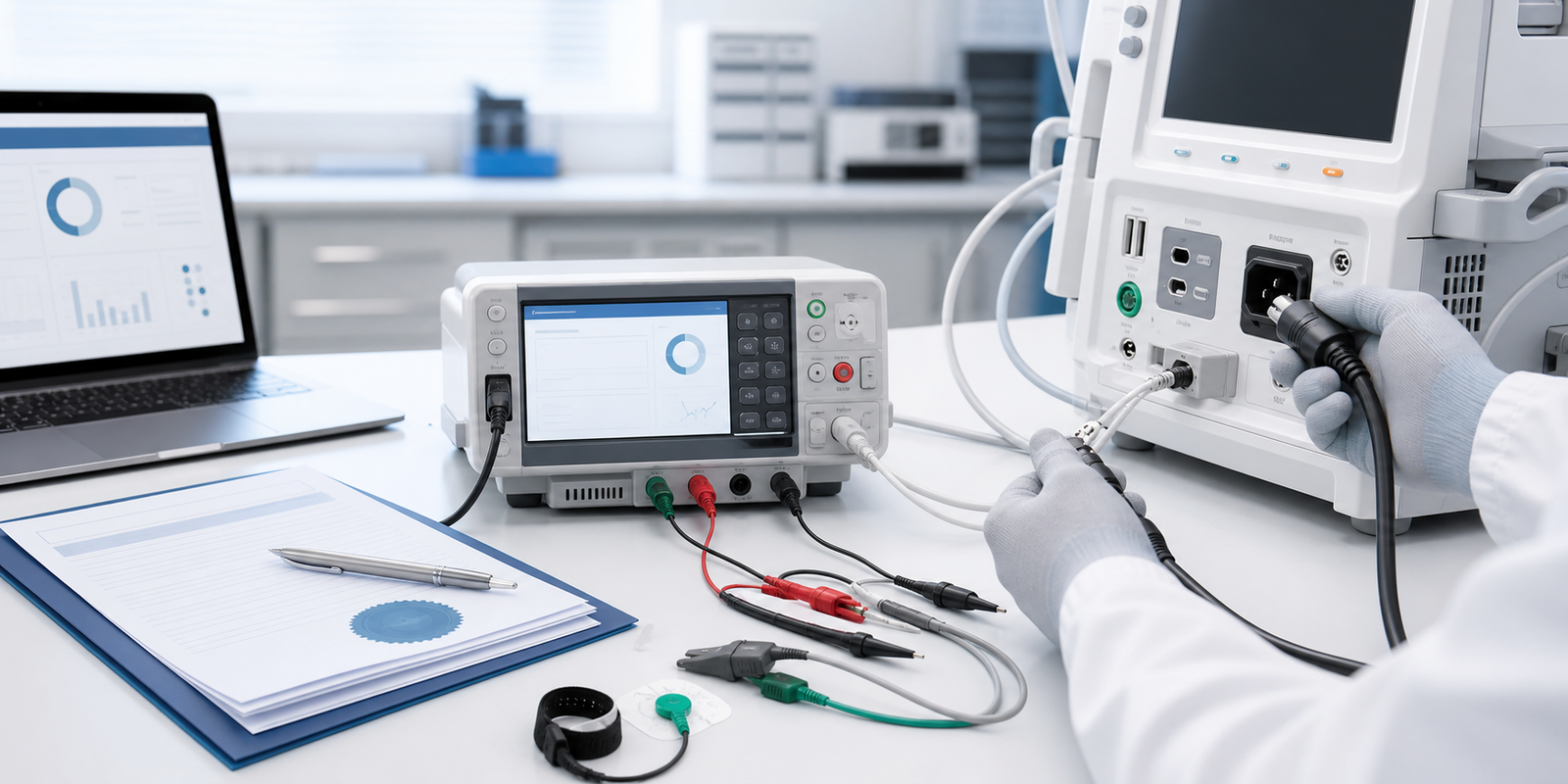
Electrical safety evaluation helps identify measurable risks related to leakage current, protective earthing, insulation deterioration and applied-part safety.
- Protective earth resistance
- Earth, enclosure and patient leakage current
- Insulation resistance and visual inspection
- Normal and applicable single-fault condition testing
Class I, Class II, B, BF and CF equipment need different test decisions.
Applicable standards, manufacturer instructions, test configuration and risk considerations should be reviewed before deciding the sequence and limits.
Methodical execution
A structured calibration process from planning to documentation
- 01Requirement review
Equipment list, quantity, location, parameters, due dates and operating constraints are reviewed.
- 02Scope verification
Requested parameters and ranges are checked against available capability and approved NABL scope.
- 03Service planning
Schedules are coordinated with the biomedical, engineering or authorised hospital team.
- 04Identification
Asset number, make, model, serial number, department and location are verified.
- 05Measurement
Applicable parameters are compared against suitable reference standards at selected test points.
- 06Records
Labels, certificates and organised reports are submitted for equipment history and audits.
Why healthcare teams choose Aussin
Specialised biomedical knowledge with hospital-focused execution
Clinical environment aware
Our team understands biomedical equipment categories, department workflows and operational pressures inside healthcare facilities.
Multi-equipment capability
Hospitals can coordinate several calibration categories through one service partner instead of scattered vendors.
Traceable measurement process
Reference standards are managed through documented calibration and traceability processes appropriate to the measurement.
Documentation support
Certificates, due dates, equipment details and status labels are organised for practical retrieval.
Healthcare ecosystem
Calibration solutions for hospitals, colleges and clinical facilities
Multispeciality hospitals
Medical colleges
NABH hospitals
Corporate hospitals
Government hospitals
Diagnostic centres
Pathology laboratories
Nursing homes
Blood banks
IVF centres
Dialysis centres
Dental clinics
Nursing colleges
Home healthcare providers
Government facilities
Medical device manufacturers
Research laboratories
Veterinary hospitals
Pharmaceutical companies
Biotechnology laboratories
Biomedical service organisations

City coverage for calibration enquiries
Aussin is based in Ahmedabad and supports calibration planning for healthcare organisations across Gujarat and major Indian cities, subject to scheduling, equipment list, site conditions and approved scope.
NABL and ISO/IEC 17025
What does NABL-accredited calibration mean?
NABL accreditation relates to the technical competence of a laboratory for defined calibration activities included in its approved scope. Customers should review the current scope, not only the certificate.
A scope normally identifies the measurement discipline, equipment category, parameter, range, calibration and measurement capability, location and applicable method.
Important scope wording
Aussin provides NABL-accredited calibration services within our approved scope. Accreditation should not be read as covering every equipment type, range, method or location.
Request scope reviewHelpful answers
Clear answers for calibration, validation and audit research
These short explanations help buyers compare calibration providers, prepare audit files and understand the standards commonly referenced in biomedical equipment management.
What is medical equipment calibration?
Medical equipment calibration compares a device indication or output with a suitable reference standard under defined conditions. The result helps determine whether the equipment is performing within selected acceptance criteria.
Why is calibration important?
Calibration supports patient safety, clinical confidence, biomedical maintenance planning, audit readiness and reliable equipment history. It also helps identify drift before it becomes a larger operational risk.
Calibration vs validation
Calibration focuses on measured values and traceability. Validation evaluates whether equipment, a process or a controlled environment performs as intended for its defined use.
NABL vs non-NABL calibration
NABL-accredited calibration is performed within an approved scope under the laboratory's quality system. Non-NABL work may still be technically useful, but it should be clearly identified and accepted by the customer.
Common biomedical audit checks
Auditors may review equipment lists, asset tags, calibration certificates, due dates, acceptance criteria, preventive maintenance records, breakdown history and corrective actions.
How to prepare for calibration?
Prepare an equipment inventory with make, model, serial number, department, location, required parameters and due date. For larger hospitals, share the list in spreadsheet format before scheduling.
ISO/IEC 17025
Defines requirements for laboratory competence, impartiality and consistent operation.
IEC 62353
Commonly referenced for recurrent testing and testing after repair of medical electrical equipment.
IEC 60601
Addresses safety and essential performance expectations for medical electrical equipment.
Measurement uncertainty
Expresses the doubt associated with a measurement result and should be considered when making pass or fail decisions.
Helpful documents customers often request
Calibration certificate sample, calibration SOP, maintenance checklist, equipment checklist, NABH checklist, calibration frequency chart, calibration request form, equipment inventory template and maintenance register.
Educational articles
Calibration and biomedical knowledge library
Dedicated educational articles help hospital buyers, biomedical engineers and quality teams understand calibration, electrical safety, NABL, NABH, validation, certificates and equipment lifecycle decisions.
All educational articles
Calibration fundamentals
Standards and accreditation
Electrical safety testing
Certificates and documentation
NABH and biomedical audit
Equipment calibration guides
Validation and qualification
Biomedical management
What is Medical Equipment Calibration?
A plain-language guide to calibration, traceability, test points, acceptance criteria and hospital documentation.
What is Electrical Safety Testing?
Explains leakage current, protective earth resistance, applied parts and electrical safety records for medical equipment.
Calibration During NABH Inspection
Helps biomedical and quality teams prepare certificates, due dates, inventory records and corrective action evidence.
FAQ library
500+ structured calibration questions and answers
Dedicated FAQ pages answer common questions about calibration, biomedical testing, NABL, NABH, electrical safety, certificates and equipment-specific requirements.
All FAQ pages
Calibration basics
Standards and accreditation
Electrical safety testing
Certificates and records
NABH and audit
Validation and qualification
Equipment-specific calibration
What is calibration?
A focused FAQ answer explaining calibration, reference standards, measured results and acceptance decisions.
Can calibration be performed onsite?
Clarifies when on-site calibration is practical and what scope, method and environmental conditions should be reviewed.
Does NABH require calibration?
Explains the calibration records hospitals commonly maintain for NABH inspection and biomedical audit readiness.
Case studies
Calibration, biomedical and audit-readiness project stories
Representative case-study pages help hospitals, diagnostic centres and quality teams understand how calibration planning, electrical safety testing, NABH preparation and biomedical outsourcing projects are handled.
All case studies
Hospital calibration projects
NABH and audit readiness
Critical care equipment
Electrical safety
Preventive maintenance
Laboratory and validation
Biomedical management
500+ Equipment Calibration at a Multi-Speciality Hospital
Department-wise calibration planning, documentation and due-date visibility for a large biomedical inventory.
Zero NABH Non-Conformities Through Proper Calibration
Calibration records, certificate review and audit-file preparation for NABH readiness.
Electrical Safety Compliance Achievement
Electrical safety documentation support for medical electrical equipment and biomedical review.
Download centre
Calibration templates, checklists and biomedical registers
Open practical template pages for calibration certificates, SOPs, NABH audit preparation, maintenance records, frequency planning and hospital equipment inventory control.
All downloads
Calibration certificate sample
Calibration SOP
Maintenance checklist
Equipment checklist
NABH checklist
Calibration frequency chart
Equipment inventory template
Calibration Request Form
A request format for equipment details, required parameters, on-site or in-lab preference and certificate expectations.
Maintenance Register
A biomedical register structure for PM visits, breakdowns, corrective action, calibration follow-up and closure tracking.
NABH Checklist
A biomedical audit checklist covering equipment inventory, certificates, PM records, electrical safety and corrective actions.
Questions
Frequently asked questions
Is every calibration performed under NABL accreditation?
No. Accreditation applies only to parameters, ranges, methods and locations included within the laboratory's current approved NABL scope.
Can medical equipment be calibrated at the hospital?
Many types of equipment can be calibrated on site, subject to the equipment category, method, environment, reference standards and approved scope.
How often should equipment be calibrated?
The interval may depend on manufacturer recommendations, equipment risk, usage, operating environment, past results, repair history and the hospital's policy.
Does NABH require calibration records?
Hospitals preparing for NABH assessment typically maintain calibration records, due-date tracking, equipment identification and supporting documentation for applicable biomedical equipment.
What is electrical safety testing for medical equipment?
Electrical safety testing evaluates measurable parameters such as protective earth resistance, insulation resistance and leakage current using an appropriate test setup and acceptance criteria.
What is the difference between calibration and validation?
Calibration compares measured values against a reference standard. Validation confirms whether equipment, an environment or a process performs as intended for a defined use.
What is measurement uncertainty?
Measurement uncertainty expresses the doubt associated with a measured result. It helps customers understand confidence in the result and should be considered with the acceptance criteria.
Does a calibration certificate mean the equipment has passed?
A certificate records measurement results. Pass or fail conclusions require defined acceptance criteria and an appropriate decision rule.
What information is required for a quotation?
Please share equipment name, quantity, make, model, required parameters, calibration location, city and expected schedule. An Excel list is preferable for larger projects.
Plan your calibration
Request a calibration quotation
Share your equipment list to receive scope review, service assessment, on-site or laboratory recommendation, quotation, schedule and documentation plan.
-
Aussin Intensive Care Private Limited
607, Satyamev Eminence, Opp Astamangal Mahadev Temple,
Science City Road, Sola, Ahmedabad - 380060, Gujarat, India - +91 99982 33444 / +91 99048 08560
- sales@aussin.co.in