
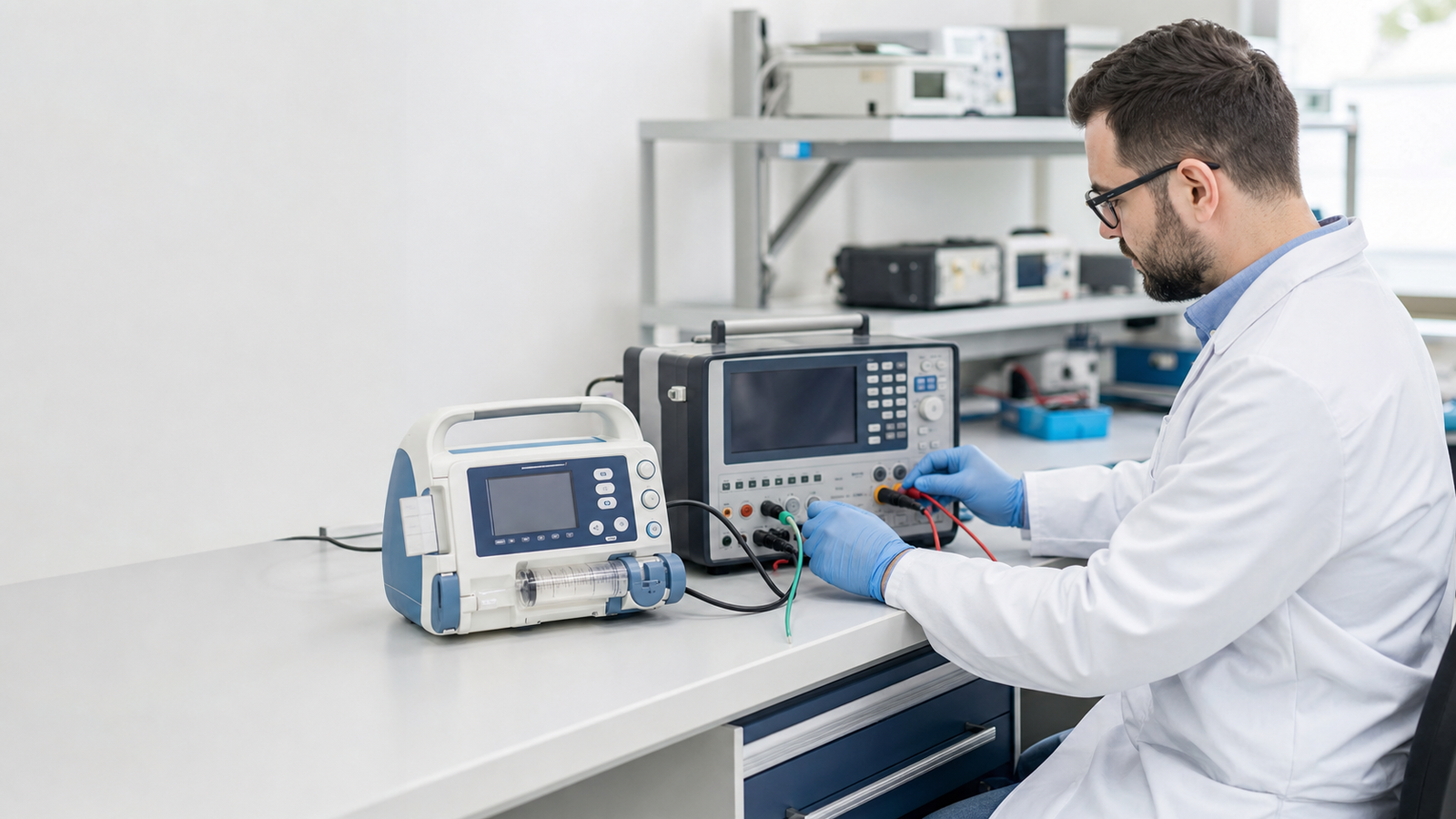
Service overview
Equipment Performance Verification for healthcare organisations
Performance verification helps confirm whether equipment is operating as expected for selected functions. It supports clinical engineering decisions but should be planned with clear acceptance criteria.
This page is written for hospital administrators, biomedical engineers, quality teams and procurement teams who are comparing service partners for equipment performance verification. The exact scope, method, location and accreditation status are confirmed only after reviewing your equipment list and requirement.
What this service covers
- Functional and parameter checks for selected devices
- Post-repair or post-maintenance verification
- Comparison with agreed limits or manufacturer guidance
- Documentation of observed performance
- Recommendation for calibration, repair or further review when needed
Why it matters
Better confidence before returning equipment to use helps the biomedical and quality team keep equipment decisions evidence based and easier to review.
Clearer service closeout records helps the biomedical and quality team keep equipment decisions evidence based and easier to review.
Early detection of performance concerns helps the biomedical and quality team keep equipment decisions evidence based and easier to review.
Support for equipment risk management helps the biomedical and quality team keep equipment decisions evidence based and easier to review.
How Aussin handles the work
- Requirement review
Share equipment details, quantity, location, required parameters and expected schedule.
- Scope confirmation
Aussin reviews feasibility, method, range, location and NABL scope applicability where requested.
- Execution
The work is planned on site or in lab according to the equipment category and approved method.
- Documentation
Reports, labels, certificate details and service records are organised for customer review.
Frequently asked questions
Is performance verification a calibration certificate?
Not always. Verification may be a functional or performance report unless calibration is performed under a defined calibration method.
When is verification useful?
It is useful after repair, during incoming inspection, before commissioning or when a department reports performance doubts.
Who defines pass or fail?
Pass or fail should be based on manufacturer limits, hospital policy or agreed acceptance criteria.